Keep pets

How to choose a cat litter box

1024720

Key Principle:

A litter box is a cat's "toilet". Inadequate space may cause stress or inappropriate urination/defecation. Always choose a larger box over a smaller one. If on a budget, prioritize foldable boxes or modular designs that can expand in size to accommodate your cat’s growth.

1. Body Length Measurement Method

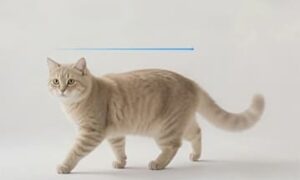
  • Definition: Body length refers to the straight-line distance from the cat's nose tip to the base of its tail (excluding the tail).
  • How to measure: Have the cat stand naturally or lie down. Use a flexible tape measure to gently stretch from the nose tip to the tail base, then record the value.
how to measure the length

2. Size Formula

Cat Type

Length Requirement

Width Requirement

Height Recommendation

Kitten (<6 months)

≥ 1.2 times the body length (about 30 - 40 cm)

≥ Body length when curled up (about 20 - 25 cm)

Entrance height < 10 cm

Adult cats (6 months +)

≥ 1.5 times the body length (about 40 - 60 cm)

≥ Body length when curled up + 5 cm (about 25 - 35 cm)

  • Height of regular litter box: 20 - 30 cm;
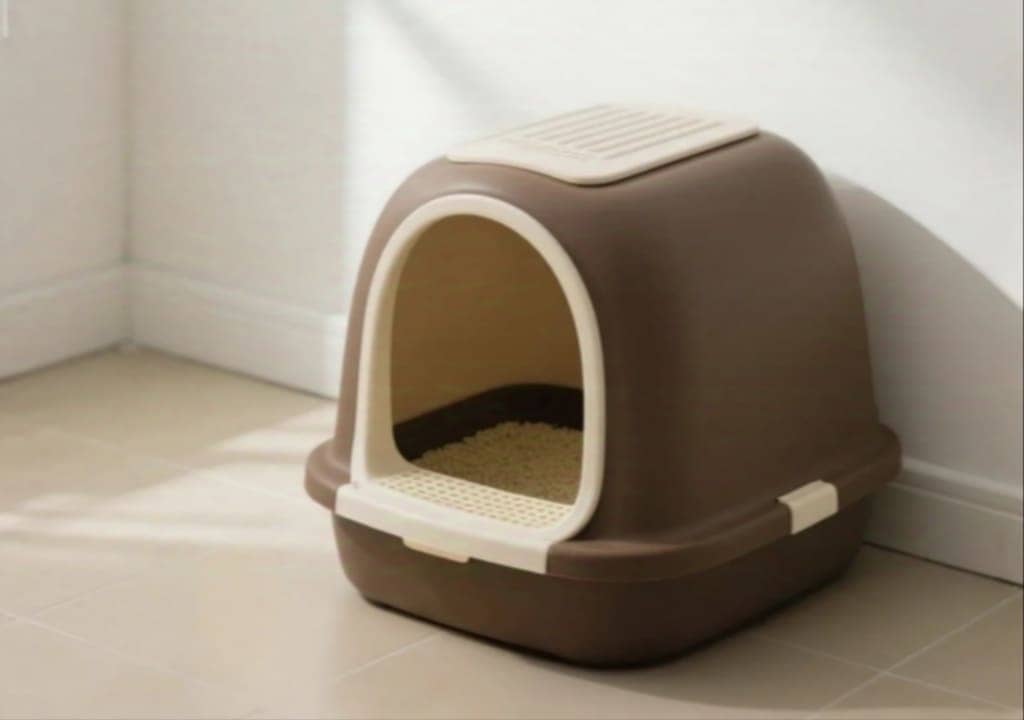
  • Height of the top of fully - enclosed litter box: 40 - 50 cm

Large cats/Obese cats

≥ 2 times the body length (about 60 - 80 cm)

≥ Body length when curled up + 10 cm (about 35 - 45 cm)

Fully - enclosed litter box needs to reserve a top space ≥ 30 cm

Example:
For an adult cat with a body length of 40 cm, the litter box should be at least 60 cm in length and 30 cm in width to ensure that it can easily turn around and bury feces.

3. Size Adjustments for Special Situations

a) Multi-Cat Households: Ensure Both Quantity and Space

  • Quantity Principle: Follow the “number of cats + 1” rule (e.g., 3 litter boxes for 2 cats) to avoid stress from competition.
  • Single Box Size: Even for small-sized cats, each litter box in a multi-cat household should meet the adult cat standard (length ≥ 50 cm) to prevent cats from refusing to use it due to crowded spaces.
  • Placement Tip: Space each litter box at least 1.5 meters apart to avoid odor interference.

b) Senior Cats / Cats with Joint Conditions: Reduce Entry and Exit Difficulty

  • Length Requirement: Same as for adult cats, but prioritize low-threshold designs (entrance height < 8 cm) or boxes with ramps.
  • Width Suggestion: Add 5–10 cm of extra space to let cats adjust postures slowly.
  • Alternative: If a cat can’t jump into a regular box, temporarily use a shallow storage box (depth 10–15 cm, length ≥ 50 cm).

c) Long-Haired Cats / Obese Cats: Avoid Space Restrictions

  • Length: Add an extra 10–20 cm to the standard size (e.g., an obese cat with a 50 - cm body length needs ≥ 80 cm) to prevent fur from getting soiled by litter or feces when turning.
  • Height: The top space of fully enclosed boxes should be ≥ the cat’s standing height (about 30–40 cm) to avoid a sense of oppression.
  • Bottom Design: Choose a flat-bottomed box instead of a curved-bottom one to reduce the chance of fur tangling with litter.

4. Verify whether the box suitable or not

a) Observation Method

  • After Placing a New Box: Check if the cat can easily perform these actions:
    • Fully enter the box without its tail dragging outside.
    • Turn 360° unobstructed, with front paws reaching the opposite edge to dig litter.
    • When standing, there is a gap of ≥ 5 cm between its head and the top of the box (for fully enclosed boxes).
  • Abnormal Signals: If the cat frequently lingers outside the box, only eliminates at the edge, or repeatedly looks back after jumping out, the box may be too small.

b) Paper Mock - up Method

  • Step
    • Cut out the litter box’s size (length × width) from newspaper or cardboard.
    • Lay it flat on the ground and guide the cat to stand on it.
    • Check if the cat’s limbs stay fully within the paper outline and there’s enough space to adjust posture.
  • Judgment Criterion: If the cat needs to place front paws on the paper’s edge to turn, the size is insufficient.

Summary: 3 steps Method for Size Selection

  • Measure the body length: Use a flexible tape measure to measure the distance from the tip of the cat’s nose to the base of its tail.
  • Calculate the size: Calculate the length as “body length × 1.5 times”. The width should be ≥ the length of the cat when curled up + 5 cm.
  • Check the condition: Verify by using the observation method or the paper-template method to ensure that the cat can use it without stress.

Leave a Reply

Your email address will not be published. Required fields are marked *